

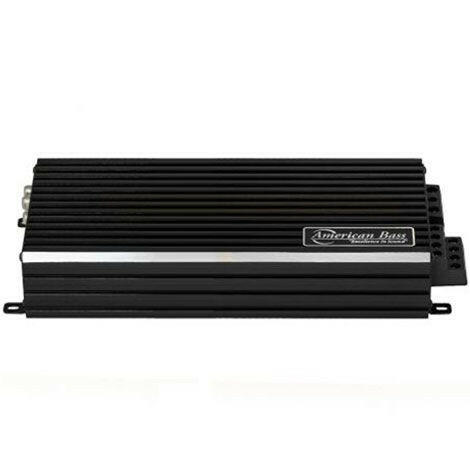
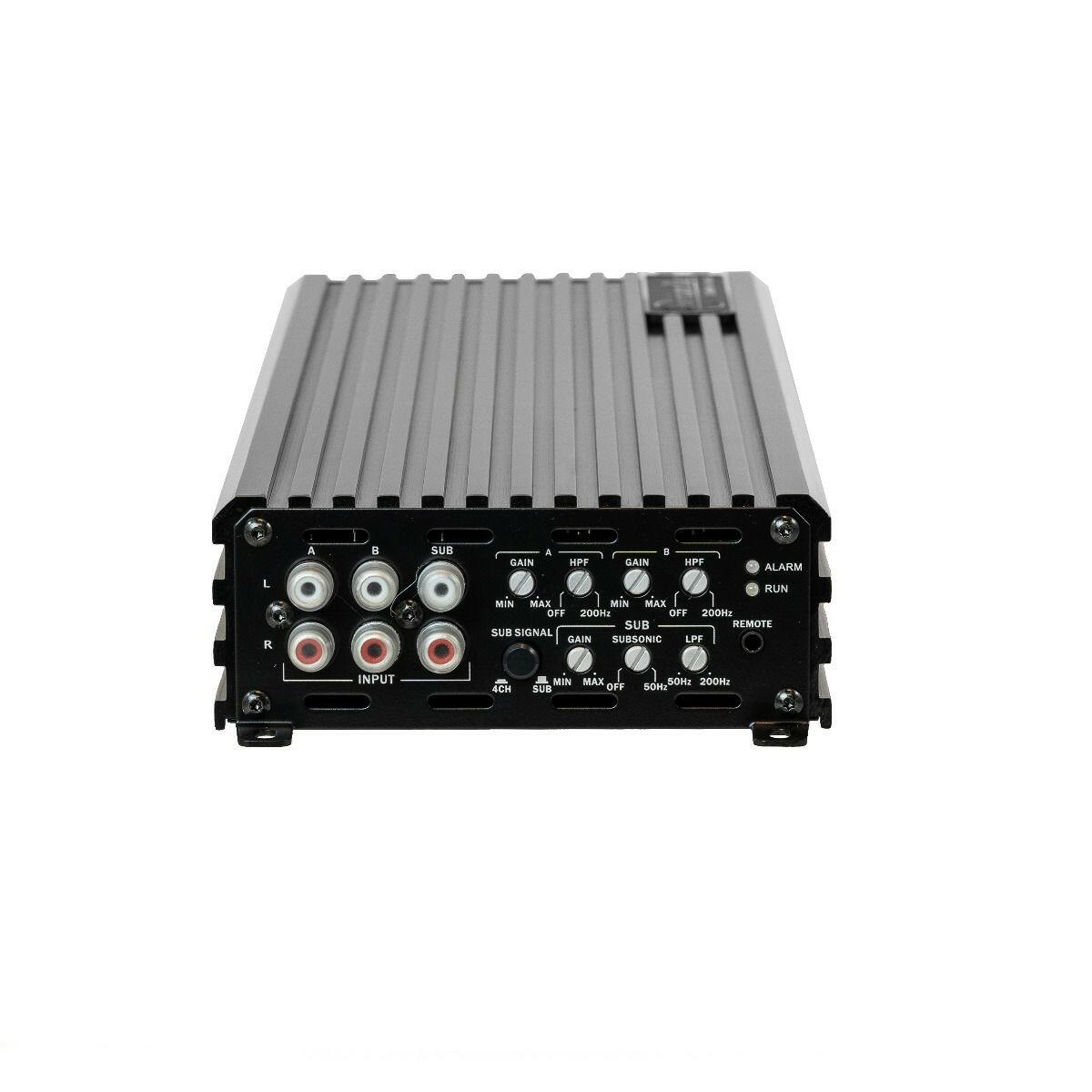
Is a 5 Channel Amp Right for Your Build?
A 5 channel amp replaces the classic two-amp setup with one box. Here is who it suits, how it divides the work and when separate amps make more sense.
Who a 5 Channel Amp Suits Best
A 5 channel amplifier shines when space, simplicity or budget drives the build. It is a strong fit for:
- Truck owners. Regular and crew cabs leave little room for two amps, but one slim chassis fits under or behind a seat.
- Compact cars and hatchbacks. One amp keeps trunk space free for a sub enclosure and your cargo.
- First full-system builds. One purchase covers every speaker plus the sub, with one wiring run to plan.
- Clean, reversible installs. Fewer cables and fewer holes make it easier to return the vehicle to stock later.
How a 5 Channel Amp Splits Its Power
| Channels | What they power | Typical crossover setting |
| 1 and 2 | Front speakers | High-pass near 80 Hz |
| 3 and 4 | Rear speakers | High-pass near 80 Hz |
| 5 | Subwoofer | Low-pass near 80 Hz |
The speaker channels usually make modest power, while the sub channel gets the largest share. A typical rating reads something like 4 x 90 watts plus 1 x 300 watts RMS. Always check both numbers at your speakers’ and sub’s impedance.
One Amp or Two?
| 5 channel amp | 4 channel + monoblock | |
| Install | One power run, one ground | Two amps plus a distribution block |
| Space | One chassis | Two chassis |
| Bass power | Good for one daily sub | As much as your build needs |
| Upgrade path | Fixed channel split | Swap or add amps later |
| Best for | Daily drivers, trucks, tight spaces | Big bass and SPL builds |
If you want a balanced daily system with one sub, a single 5 channel amplifier is the smart buy. If you want bass that rattles mirrors, split the job: a 4 channel car amplifier for speakers and a monoblock amplifier for subs.
Match the Sub Channel to Your Subwoofer
The best 5 channel car amplifier for you is the one whose sub channel fits your sub. Compare that channel’s RMS at your sub’s final impedance with your sub’s RMS rating. Say your 12-inch sub is rated at 500 watts RMS and wired to 2 ohms. It pairs well with a sub channel that makes around 400 to 600 watts at 2 ohms. Size the speaker channels the same way, usually 50 to 100 watts each for door speakers.
Pick a sub to match from our car subwoofers, then size the enclosure with our free subwoofer box calculator.
Power and Wiring
A 5 channel amp draws current for your whole system at once, so wire it like it matters:
- Size your power and ground cable with the power wire calculator.
- Mount the main fuse within about 18 inches of the battery.
- Check your total system draw with the electrical load calculator.
- Find cable, fuses and terminals in our wires and accessories collection.
Mounting and Heat
A 5 channel amp carries the whole system, so it works hard. Mount it where air can move: under a seat with clearance, behind the rear seat or on a trunk wall. Leave space around the heat sink and keep it away from the subwoofer box. Route power wire away from signal cables to avoid noise.
Tune for a Balanced Sound
Set crossovers first and gain second. Then use the sub level to blend your bass with the doors. Keep your radio’s fader centered or slightly forward so the sound stage stays in front of you. Our amp gain calculator helps you set each channel without guesswork.
Signs You Have Outgrown One Amp
Bass that runs out before your doors do, an amp that runs hot through long sessions or plans for a second big sub all point the same way. Keep the 5 channel on your speakers and move the sub to its own monoblock. Your existing wiring and install work carry straight over.
Why Buy From American Bass
We have been building car audio out of Twinsburg, Ohio for over 35 years. When you buy direct, you get:
- Honest specs with RMS listed for every channel and impedance.
- Free shipping over $100 and hassle-free 30-day returns.
- A 1-year warranty on new amplifiers.
- Free planning tools for matching, wiring, gain and electrical load.
- Expert help Monday through Friday, plus an installer finder if you want it fitted professionally.
Comparing every option? Browse all car audio amplifiers, or choose a 2 channel car amplifier for a front-only build.
FAQs
What is a 5 channel amp?
It is a single amplifier with five outputs: four for your speakers and one higher-power channel for a subwoofer. In many builds it replaces a separate 4 channel amp and monoblock.
Is a 5 channel amp better than two separate amps?
It is simpler, smaller and quicker to install. Two amps offer more total bass power and more room to upgrade. For a daily system with one sub, a 5 channel amp is often the better value.
Can a 5 channel amp power two subwoofers?
Sometimes. Wire both subs to a load the sub channel supports, often 2 ohms, and make sure the channel’s RMS covers both subs. For two high-power subs, a dedicated monoblock is the better choice.
How much power does the sub channel have?
It varies by model, but the sub channel always makes more power than each speaker channel. Check its RMS at your sub’s impedance on the spec sheet before you buy.
What wire gauge does a 5 channel amp need?
Go by the amp’s fuse rating and the length of your power run. Higher fuse ratings and longer runs need thicker cable. Our power wire calculator gives you the exact gauge.
Can I add another amp later?
Yes. Many builders start with a 5 channel amp, then add a monoblock when they want more bass. Plan your power wire and distribution block with room to grow.
EXPLORE OTHER AMPLIFIERS
Shop our range of car amplifiers and find the right power and channel configuration for your audio system.


